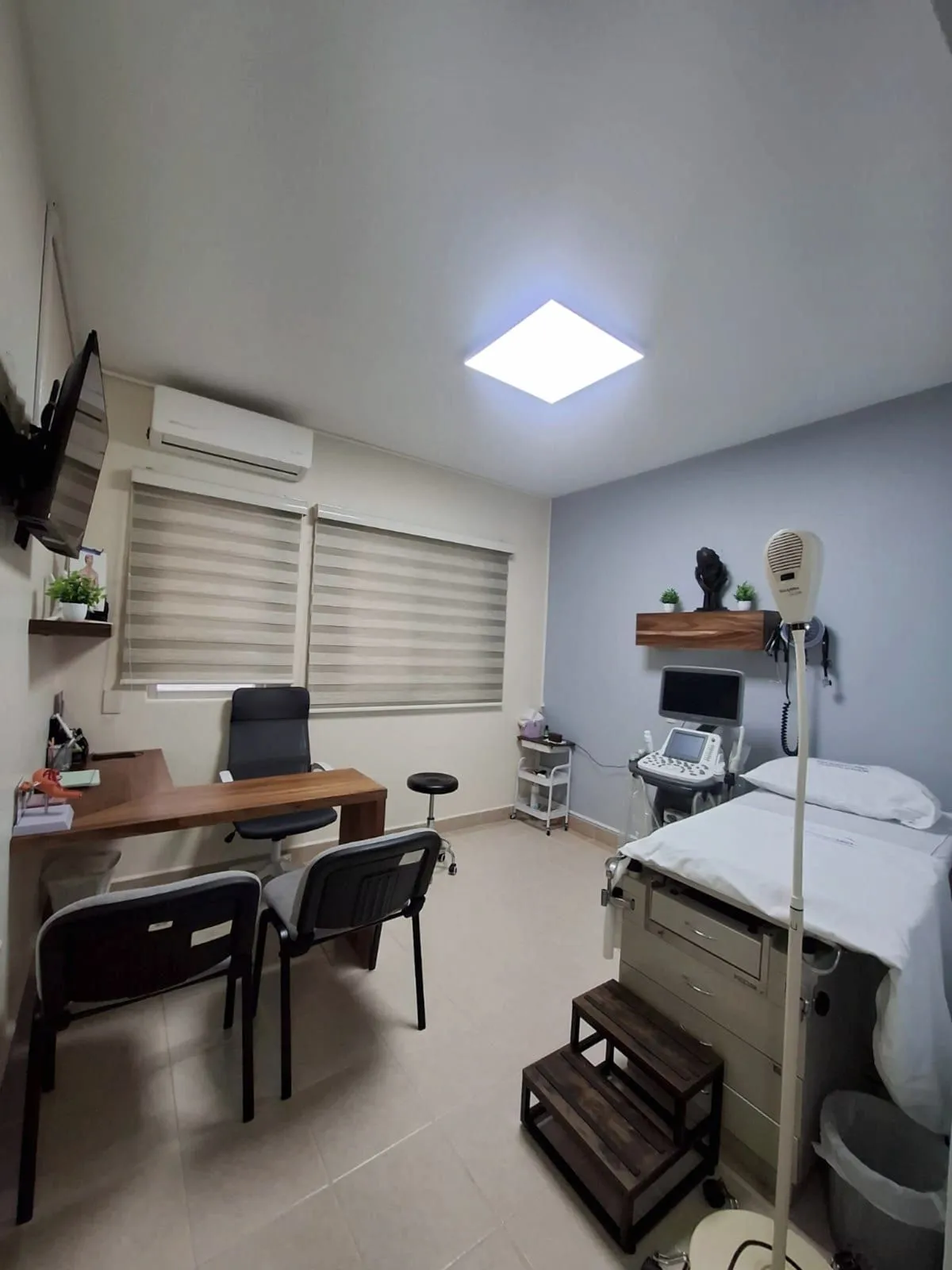
- Hours
- Usually 8:00 a.m. to 6:00 p.m., depending on each specialist’s schedule.
- Appointment
- The consultation fee is arranged directly with the specialist. If you prefer that the clinic finds one for you, the appointment takes a 200 MXN advance payment.
- Languages
- The doctors who see patients at the clinic speak Spanish and English.
Did you know?
Gynecology cares for female reproductive health at every stage of life. From adolescence, with the first periods, through pregnancy, birth control and menopause, and beyond. It is not only for when something hurts: regular check-ups are also prevention.
- Gynecology cares for female reproductive health at every stage of life. From adolescence, with the first periods, through pregnancy, birth control and menopause, and beyond. It is not only for when something hurts: regular check-ups are also prevention.
- The Pap test and HPV test help detect early changes that could lead to cervical cancer. When found at an early stage, those changes can be treated before they become cancer. Ask your gynecologist how often you should have these tests.
- The HPV vaccine prevents most cases of cervical cancer. It is best given before sexual activity begins, but your doctor can advise you on whether it suits you at other ages. Being vaccinated does not replace the Pap test: the two measures complement each other.
- Any vaginal bleeding after menopause should be checked. Even if it is light or happens only once, it is not expected at that stage and its cause is worth finding out. In most cases it is not serious, but only an exam can confirm that.
- Breast self-exams help you know your body and notice changes; they do not replace a mammogram. Do one once a month, a few days after your period, looking in the mirror and using touch. If you notice anything different from usual, have it checked without waiting.
- A breast lump, skin changes or nipple discharge need to be checked. Most lumps are not cancer, but only a doctor can tell. Go soon: finding it early, whatever it is, is always best.
- Menstrual cycles vary from person to person; what matters is noticing changes in your own pattern. A regular cycle can last roughly 21 to 35 days. If its length, amount of bleeding or pain suddenly changes, it is worth mentioning at a visit.
- Period pain that keeps you from your daily activities is not "normal" and deserves a visit. Many women put up with it for years thinking it is part of having a period, when it may have a treatable cause. Keeping a record of your symptoms helps the doctor.
- Folic acid before and early in pregnancy helps prevent neural tube defects in the baby, such as spina bifida. Because the neural tube forms in the first weeks, sometimes before you know you are pregnant, it is worth asking if you are planning a pregnancy so you are told how to take it.
- During pregnancy, bleeding, a severe headache, blurred vision or sudden swelling are warning signs: seek care right away. So are reduced baby movements, strong abdominal pain or leaking fluid. Do not wait for your next appointment.
- Menopause is a natural stage, and its symptoms have management options you can discuss with your gynecologist. Hot flashes, mood changes or trouble sleeping are common, but you do not have to face them alone. Every woman goes through this stage differently.
- Foul-smelling discharge, itching or burning deserve a check-up; avoid self-medicating. Over-the-counter creams and suppositories may not suit your case and can sometimes hide the problem without solving it. An exam identifies the cause and the right treatment can be prescribed.
- Prenatal care from early pregnancy helps monitor the health of both mother and baby. With regular visits, lab tests and ultrasounds, problems such as high blood pressure or gestational diabetes are caught in time. Starting early gives you more opportunities to look after yourself.
- Condoms are the only birth control method that also protects against sexually transmitted infections. Other methods prevent pregnancy but do not protect you from them. Used correctly every time, they are one of the best ways to take care of yourself, alone or combined with another method.
- There are many birth control methods; the right one depends on your health and your plans. Some are used daily, others last months or years, and others contain no hormones. Your gynecologist explains the advantages and limits of each so you can choose with full information.
- Sudden, severe pelvic pain, especially with a late period, is an emergency. It may be related to a pregnancy outside the uterus or another problem that cannot wait. If there is also dizziness, fainting or bleeding, go to the emergency room right away.
- Uterine fibroids are common and often cause no symptoms. They are benign growths of the uterine muscle. When they cause problems, such as heavy bleeding or abdominal pressure, there are treatment options your gynecologist can explain.
- Recurrent urinary infections should be investigated, not just treated each time. Looking for the cause helps keep them from coming back and from reaching the kidneys. Meanwhile, drink enough water, do not hold in the urge to urinate and see a doctor if there is fever or lower back pain.
- Polycystic ovary syndrome can cause irregular cycles and is linked to insulin resistance. It can also come with acne, extra hair growth or difficulty getting pregnant. It can be managed, and changes in diet and exercise are often an important part of treatment.
- If you are pregnant, ask before taking any medicine or supplement. Some products, even over-the-counter or natural ones, can affect the baby. Bring the list of what you take to your prenatal visit and do not stop a prescribed treatment without talking to your doctor.
- A mammogram is the screening test for breast cancer; your doctor will tell you when to start and how often. It can find changes before they can be felt. The starting age depends on your personal risk and family history, so it is worth discussing at a visit.
- If you have been trying to get pregnant for a year (or six months if you are over 35) without success, see a doctor. There are common, treatable causes, and they are not always in the woman: the partner is also evaluated. Going in time saves months of uncertainty.
- Pelvic floor exercises can help prevent and treat urine leakage. They strengthen the muscles that support the bladder and uterus, and are useful after childbirth and with age. A doctor or physical therapist can teach you to do them correctly.
- After childbirth, fever, increasing pain or heavy bleeding need medical attention. So do a reddened wound, foul-smelling discharge or intense sadness that does not improve. Caring for your baby starts with caring for yourself: do not put off the visit.
- A first gynecology visit does not always include an exam; it can be a guidance conversation. You talk about your cycles, your questions and your health history. You can bring someone with you if you prefer, and it is a good time to ask what you were afraid to ask.
- Endometriosis can take years to diagnose; if your period pain is severe, mention it at your visit. It can also cause pain during intercourse or bowel movements, and difficulty getting pregnant. The sooner it is investigated, the sooner symptoms can be eased.
- Calcium and vitamin D in your diet help protect your bones, especially after menopause, when bone density decreases. Dairy, leafy greens and nixtamalized corn tortillas provide calcium, and a few minutes of sun at moderate hours help with vitamin D.
- Emergency contraception does not replace a regular birth control method. It is for exceptional situations, such as method failure or unprotected intercourse, and works best the sooner it is used. Ask about choosing a method you can use consistently.
- Gynecology visits are confidential. What you discuss with your doctor is private medical information, and you can talk openly about intimate matters. If you feel embarrassed, say so: health professionals are used to handling these questions with respect.
- Bring the date of your last period to your visit: you will almost always be asked for it. It also helps to note how long your cycle lasts, whether you have pain or bleeding between periods, and the methods you have used. Simple apps and calendars can help you keep this record.
What Gynecology covers
Some of the most common reasons for a visit.
Regular check-ups
An exam and guidance on the screening tests that apply to you at your age.
Menstrual cycle
Irregular, painful or very heavy periods.
Infections
Discharge, itching, burning and other gynecological infections.
Family planning
Guidance on choosing the contraceptive method that suits you best.
Pelvic pain
Investigation of the cause of pain in the lower abdomen.
Menopause
Symptoms such as hot flashes, mood changes or poor sleep, and how to manage them.
Cysts and fibroids
Assessment of findings such as cysts or fibroids, with the help of ultrasound.
Every stage of life
Adolescence, the childbearing years and the years after menopause.
Your gynecological visit
We talk
Tell the doctor about your symptoms, your cycle and your history. Everything is confidential.
Examination
It is done with your consent and each step is explained. A person you trust may accompany you.
Tests if needed
An ultrasound or laboratory tests, depending on the case.
Instructions and follow-up
You receive clear instructions and, if needed, another visit is scheduled.
Do not wait for an appointment if you have
Go to emergency care right away; you do not need an appointment.
Call the clinic- Heavy vaginal bleeding
- Severe or sudden pelvic pain
- Fever with pelvic pain or foul-smelling discharge
- Bleeding or severe pain while pregnant
This list is general guidance and does not replace an assessment by a doctor.
Would you like to see us?
Book your appointment or call the clinic to find out how we can help.
- Address
- Av. José María Morelos y Pavón 6, Centro, 40890 Zihuatanejo, Gro.
- Phone
- 755 554 8617
- Management: quotes and information
- gpe.gal@hotmail.com
- Enfermeriamediciel@gmail.com
- facebook.com/clinicamediciel
- Languages
- Spanish and English